Laser Eye Surgery Cost: What You Should Expect
LASIK surgery has increased in popularity for those seeking to improve their vision without the struggle of contacts or glasses. With the rising costs of daily contact lenses and patients needing multiple pairs of glasses and/or sunglasses, patients are turning to LASIK to determine if this is a more cost-effective way to address their visual demands. The main question everyone has is- What is the cost of Laser Eye Surgery? We are here to answer the most common questions!
How much does Laser Eye Surgery cost?
One of the main concerns for anyone thinking vision correction is the cost involved. Within the United States, the average cost of Laser Eye Surgery is $1999 to $4000 per eye. However, the total cost is dependent on location. There are also things to consider down the line after your LASIK surgery:
- Follow-Up Visits- While some follow-up visits may be included in your total price, it may not be included after so much time. We recommend yearly eye exams to ensure your results after surgery are optimal and to keep up with potential changes in vision.
- Enhancements- According to Forbes, LASIK has a success rate of 99.5% of reaching 20/40 or better, however, some patients may require an enhancement (secondary surgery) for ideal results and the additional procedure(s) may come with a cost. With our office, our chance of enhancements are less than 2%.
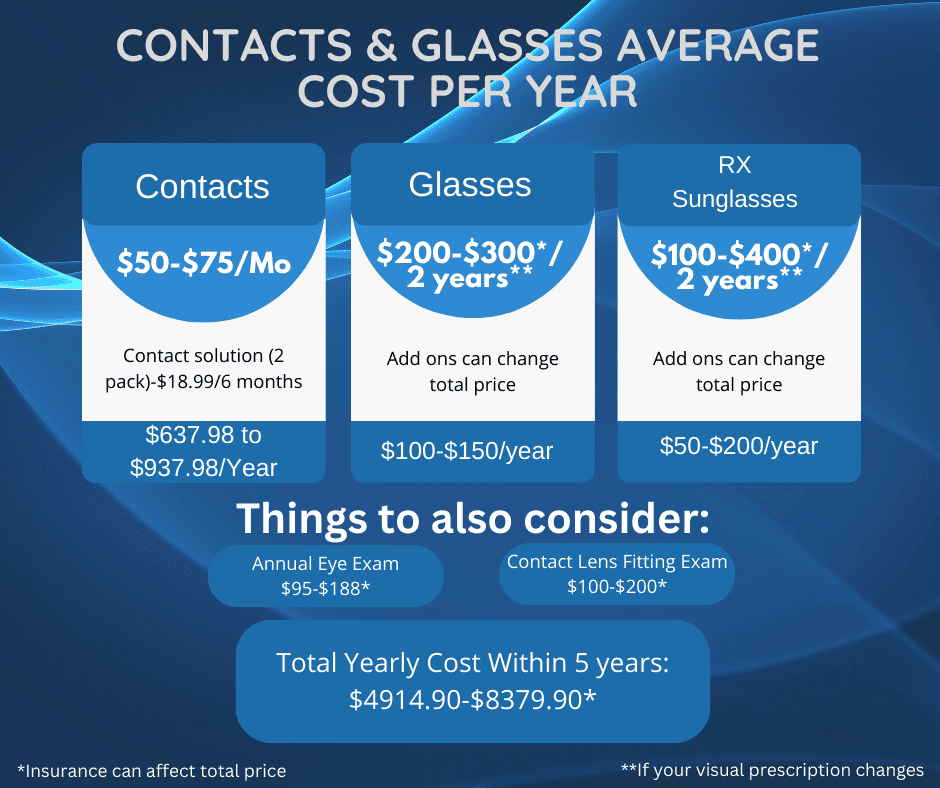
Traditional methods such as glasses and contacts require ongoing expenses. Glasses need periodic updates due to changes in prescription or wear and tear, while contacts entail regular purchases of lenses and cleaning solutions. Over time, these costs can accumulate, making them a significant financial commitment.
Contact us to inquire about our current pricing!
On the other hand, LASIK surgery presents an upfront investment but promises long-term savings. While the initial cost of LASIK may seem daunting, many patients find it to be a worthwhile investment when considering the cumulative expenses of glasses or contacts over the years. Your LASIK surgery could pay for itself within 5 years, considering the cost of contacts, glasses, prescription sunglasses, etc.
Does insurance cover any cost towards Laser Eye Surgery?
LASIK surgery is considered an elective procedure and thus not fully covered by insurance. However, some insurance companies may reimburse a portion or percentage of the total cost. To understand the terms of coverage, reach out to your insurance provider for more details.
What payment options do I have?
Each LASIK facility has many options for payment towards surgery to include:
- Major Credit Cards (i.e. Visa, Mastercard, Discover)
- FSA/HSA
- Financing options like Care Credit
- Certified Cashier’s Check
Things to Consider: What are our Recommendations?
As a Laser Eye Surgery Center with over 30 years of experience in LASIK, we understand how important this decision is and how much of an impact it can have. There are a few things to consider besides cost when thinking about LASIK.
Technology
We always suggest ensuring that the facility you choose has all bladeless technology. Due to the advancements in technology, an all-bladeless LASIK procedure increases the health and safety of the procedure.
Reputation
We highly suggest ensuring the clinic is well-established with experienced surgeons and has a track record of successful procedures that will lessen the chance of complications. Dr. Jon Dishler has over thirty years of experience and was one of the first surgeons to start LASIK in Colorado.
Education
You want to pick a center that is upfront and honest with the information given. With every facility having its own process for consultations, we pride ourselves on being able to educate our patients to ensure they are making the best decision for themselves. We encourage all patients to ask as many questions as possible to set their minds at ease.
Quality of Life
Glasses and contacts offer convenience and flexibility, allowing wearers to easily adjust their vision correction as needed. However, they can also be cumbersome, requiring maintenance, cleaning, and the inconvenience of remembering to bring them along wherever one goes. LASIK surgery, on the other hand, presents the opportunity for freedom from these daily hassles. The ability to wake up and see clearly without reaching for glasses or inserting contacts can be life-changing for many individuals. LASIK also eliminates the risk of glasses getting lost or broken and reduces the likelihood of eye infections associated with contact lens wear. For those with active lifestyles or demanding professions, the convenience and enhanced freedom offered by LASIK can be invaluable.
LASIK surgery presents a compelling alternative with the promise of long-term savings and enhanced quality of life, despite it’s initial cost.
Once you have a consultation completed by an experienced eye care professional, it will make the decision easier. Patients can weigh the cost, lifestyle preferences and overall benefits to achieve optimal vision and clarity for years to come.
Here at Dishler Laser Institute, we understand everyone has different needs and wants. Our commitment is to be able to present all the options to include individualized risks/benefits for each patient upfront. Schedule your free consultation and get on the road to better vision!